Pregnancy Due Date: How Naegele's Rule Works (and Why It's Only an Estimate)
How is a due date calculated from your last period? The exact math behind Naegele's Rule, why only 5% of babies arrive on the calculated date, and what actually shifts the estimate.
Published July 13, 2026
If you’ve ever wondered how is due date calculated from a single date — the first day of your last menstrual period — the answer is a 200-year-old rule that’s still the clinical standard today, precisely because it’s simple, consistent, and close enough to be useful.

The rule itself
Due Date = LMP + 280 days
LMP = first day of the last menstrual period. 280 days = 40 weeks, the clinical standard for a full-term pregnancy.
Named for German obstetrician Franz Naegele, the rule is simply: take the first day of the last menstrual period and add 280 days (40 weeks). That’s the entire calculation — no complex math, just a fixed offset applied consistently.
A worked example
LMP of January 1 → due date of October 8 — exactly 280 days later. LMP of March 15 → due date of December 20. The Pregnancy Due Date Calculator runs this same day-count arithmetic and also reports how many weeks pregnant you currently are, based on today’s date.
Why it assumes a 28-day cycle
Naegele's Rule implicitly assumes a textbook 28-day menstrual cycle with ovulation on day 14. Real cycles vary — commonly anywhere from 21 to 35 days — which is exactly why the calculated date is an estimate, not a guarantee.
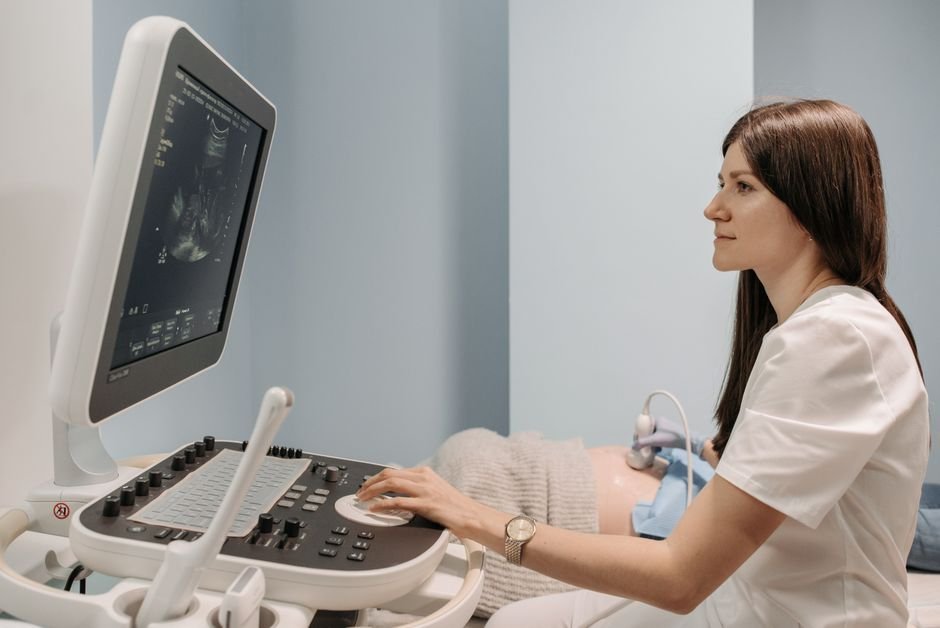
For someone with a longer or shorter cycle than 28 days, actual conception (and therefore the true due date) can shift by several days to over a week from what the rule alone predicts. This is one reason clinicians increasingly cross-check LMP-based dating against an early ultrasound, which measures fetal size directly rather than relying on cycle assumptions.
Only 5% of babies arrive on their due date
According to research summarized by the American College of Obstetricians and Gynecologists, a full-term pregnancy is considered anywhere from 37 to 42 weeks — a five-week window, not a single day. The calculated due date is the statistical midpoint of a normal range, not a prediction of the actual delivery day.
| What the due date represents | What it doesn’t represent |
|---|---|
| The statistical middle of a 5-week normal range | A guaranteed delivery day |
| A useful planning anchor | A precise medical deadline |
Trimesters and the due date
Trimester boundaries are themselves conventions layered on top of the same LMP-based week count Naegele’s Rule produces — which is one more reason a consistent, standardized starting point (even one that’s ultimately an estimate) matters clinically: it lets every other convention in prenatal care, from trimester boundaries to recommended screening windows, be defined consistently relative to the same reference point.
What actually shifts the estimate
- Irregular cycles — a longer or shorter-than-28-day cycle shifts true ovulation, and therefore true conception, away from the rule’s built-in assumption.
- Early ultrasound dating — fetal measurements in the first trimester are generally considered more accurate than LMP alone, especially for someone unsure of their exact LMP date or with irregular cycles.
- IVF conception dates — when the exact conception or transfer date is known, due dates are calculated directly from that date rather than from LMP, sidestepping the cycle-length assumption entirely.
A brief history of the rule
Franz Naegele wasn’t actually the first to describe this method — historical research suggests the underlying calculation traces back further, to earlier German and Dutch obstetric texts, with Naegele popularizing and standardizing it in his influential 19th-century textbook. What made the rule durable for two centuries wasn’t novelty — it was that a simple, fixed-offset calculation gave obstetricians a consistent, reproducible reference point at a time when no other dating method (like ultrasound) existed at all. Even today, with far more precise tools available, LMP-based dating remains the first estimate offered at a first prenatal visit, before any scan has taken place.
Weeks pregnant vs. due date: two different outputs
A due date calculator typically reports two related but distinct pieces of information: the estimated due date itself, and how many weeks pregnant you currently are, based on the gap between your LMP and today’s date. Both numbers come from the same underlying 280-day framework, just measured from different reference points — the due date looks forward from LMP by the full 280 days, while “weeks pregnant” looks at how much of that 280-day span has already elapsed. This is also why pregnancy is conventionally described in weeks from LMP rather than from the actual estimated conception date, which typically occurs roughly two weeks after LMP for a standard cycle — a detail that surprises some people the first time they learn it, since “6 weeks pregnant” doesn’t mean 6 weeks since conception.
Using the estimate practically
Naegele’s Rule remains useful precisely because of its simplicity and consistency — it gives every pregnancy a comparable, well-understood reference point from day one, even before an ultrasound is possible. The Pregnancy Due Date Calculator applies the same 280-day rule instantly from your LMP date, while your care provider’s ultrasound-based estimate remains the more precise figure once it’s available.
FAQ
Why 280 days specifically? It corresponds to 40 weeks, the clinical convention for a full-term pregnancy, counted from the first day of the last period rather than from conception (which typically occurs about two weeks later).
Is an ultrasound due date more accurate than Naegele’s Rule? Generally yes, especially in the first trimester, since it measures the fetus directly rather than relying on an assumed 28-day cycle.
What if my periods are irregular? Naegele’s Rule becomes less reliable the further your actual cycle length is from 28 days — an early ultrasound is typically recommended for more accurate dating in this case.
Does the due date change as pregnancy progresses? The LMP-based estimate itself stays fixed once calculated, but care providers commonly adjust the working due date if an early ultrasound’s measurements suggest a meaningfully different gestational age than the LMP-based calculation implied.
Who actually created the rule associated with Naegele’s name? Historical evidence suggests the underlying calculation predates Franz Naegele’s 19th-century textbook, appearing in earlier German and Dutch obstetric writing — Naegele is credited mainly for popularizing and standardizing it into common clinical use.