Brick Bond Patterns Compared: Running, Common, Flemish, and English Bond
The main brick bond patterns explained — running bond, common bond, Flemish bond, and English bond — how each affects strength, appearance, and material waste.
Published July 15, 2026
The way bricks overlap course to course — the bond pattern — isn’t just a visual choice. It affects a wall’s structural strength, how much cut brick (and waste) a project generates, and how experienced a bricklayer needs to be to execute it correctly.
Why bond pattern exists at all
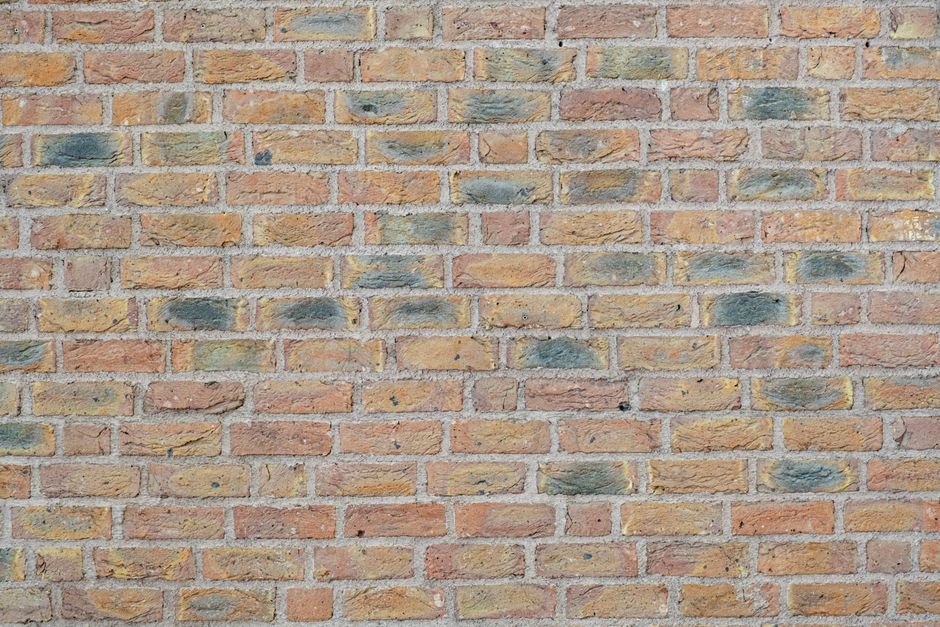
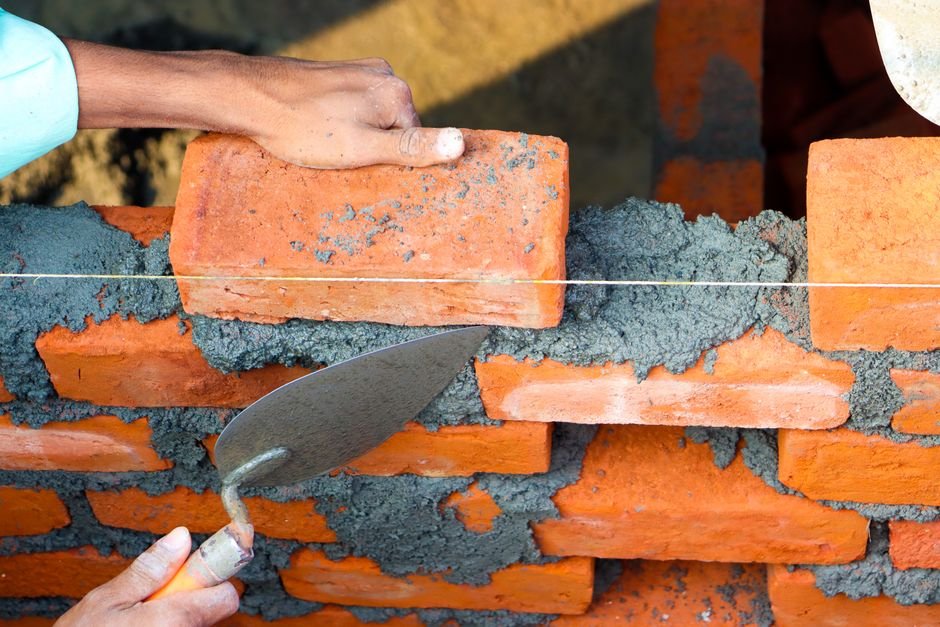
A brick wall built with every vertical mortar joint stacked directly above the one below it (called stack bond) has a continuous vertical line of weakness running the full height of the wall — a genuinely poor structural choice for anything beyond a thin decorative veneer. Bond patterns solve this by staggering, or “overlapping,” vertical joints from one course to the next, so any vertical crack or structural stress has to zigzag through solid brick rather than following an unbroken mortar line. This staggering is the entire structural purpose behind every bond pattern discussed below — the visual pattern each one produces is a byproduct of how the staggering is achieved, not the primary goal.
The four common patterns
Every course offset by half a brick length. The simplest pattern, minimal cutting, most common for single-wythe veneer walls.
Running bond with a header course (bricks laid end-on) every 5-7 courses, tying a double-wythe wall together structurally.
Alternating stretcher and header bricks within every single course, producing a distinctive checkerboard-like face pattern.
Alternating full courses of stretchers and full courses of headers, considered one of the strongest traditional bonds.
Waste and cutting: why pattern choice affects material orders
Order Quantity = Calculated Bricks × (1 + Waste%)
A 1,440-brick wall becomes about 1,512 bricks at 5% waste, or 1,585 at 10%.
Running bond, with its simple half-brick offset, generates the least cutting waste of any bond pattern — most bricks are used whole, with cuts needed only at wall ends and openings. Flemish and English bond, by contrast, require specific half-length “closer” bricks at pattern transitions and corners to maintain the alternating stretcher-header sequence correctly, which meaningfully increases the proportion of bricks that get cut rather than used whole. This is exactly why a project using a decorative bond pattern should budget a higher waste percentage than the base Brick Calculator formula alone would suggest for a simple running-bond wall.
Historically, header courses in bonds like common bond and English bond weren't purely decorative — in solid double-wythe walls built before modern wall-tie hardware existed, header bricks physically spanned both wythes, mechanically tying the two brick layers together into a single structural unit. Modern cavity wall construction with metal wall ties has made this structurally necessary in far fewer situations, which is part of why running bond veneer over a structural backup wall has become so common today.
Structural strength: a rough hierarchy, not a strict ranking
English bond is traditionally regarded as among the strongest common bonds, owing to its full alternating header/stretcher courses providing frequent, consistent ties through the wall’s thickness. Flemish bond offers a comparable structural logic with headers in every course rather than every other course, though the specific tie frequency differs. Running bond, used almost universally today for single-wythe veneer over a separate structural backup (wood or steel framing, or a structural block wall), doesn’t need the same header-tie structural role at all — the veneer’s job is weather protection and appearance, with the actual structural load carried by the backup wall behind it, which is exactly why running bond’s simplicity is a perfectly reasonable, not “weaker,” choice for that specific, extremely common modern wall system.
Choosing a pattern for a real project
| Pattern | Best fit |
|---|---|
| Running bond | Modern veneer walls, cost-conscious projects, simplest execution |
| Common bond | Solid double-wythe walls needing periodic structural ties |
| Flemish bond | Historic restoration, decorative facades wanting a distinctive checkered look |
| English bond | Historic restoration, projects prioritizing traditional maximum-strength solid brickwork |
For most contemporary residential and commercial construction using brick veneer over a framed or block structural wall, running bond is the practical default — it’s faster to lay (translating to lower labor cost), generates less waste, and doesn’t sacrifice anything structurally relevant given that the veneer isn’t the load-bearing element. Flemish and English bond remain popular specifically for their appearance in historic-style or restoration projects, where the higher material and labor cost is a deliberate aesthetic and historical-accuracy choice, not an oversight.
Estimating quantities for your chosen pattern
The Brick Calculator computes the base wall-area-times-density figure regardless of bond pattern — the pattern-specific adjustment comes from choosing an appropriate waste percentage on top of that base number, higher for Flemish or English bond, lower for a simple running bond veneer. Checking with your specific brick supplier or contractor about their typical waste allowance for your chosen pattern, rather than assuming a single universal percentage, gives the most accurate real-world order quantity. Bricks and mortar are only two pieces of the full project budget — the complete cost estimating guide walks through the rest, including labor.
FAQ
Is running bond weaker than Flemish or English bond? Not in the context it’s typically used today — running bond veneer relies on a separate structural backup wall for load-bearing strength, so the header-tie structural role that makes Flemish and English bond strong for solid brickwork isn’t relevant to veneer’s actual structural job.
Why do decorative bond patterns cost more to build? They require more cut “closer” bricks at corners and pattern transitions, increasing both material waste and labor time compared to running bond’s simple, repetitive half-brick offset.
Can I mix bond patterns on the same wall? It’s structurally possible but uncommon outside specific decorative design choices — most walls use a single consistent bond pattern throughout for both structural predictability and visual consistency.
What’s the difference between a “header” and a “stretcher” brick? A stretcher is a brick laid with its long face showing on the wall surface; a header is a brick laid with its short end showing — bond patterns are defined by how these two orientations alternate.
Does bond pattern choice affect the brick-per-square-meter density figure? Only marginally for the base density itself — the bigger effect is on waste percentage from cutting, which should be added on top of the base calculation for decorative patterns.
Is Flemish bond purely decorative today, or does it still serve a structural purpose? In modern cavity wall or veneer construction it’s largely decorative, since metal wall ties now handle the structural tying role that header bricks historically performed in solid masonry walls.