





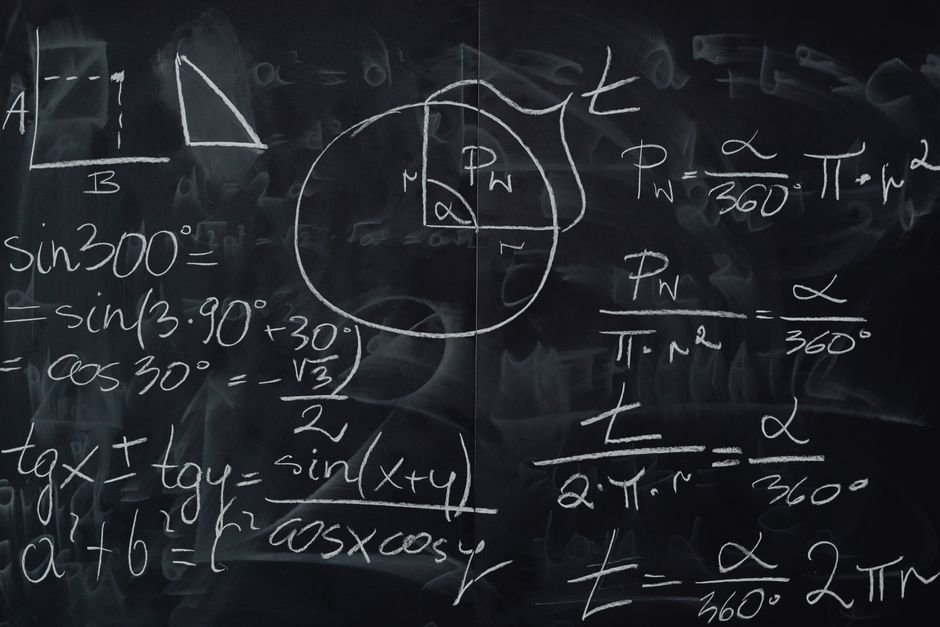
The two formulas this calculator computes — area as π times radius squared, circumference as 2π times radius — both derive from the same fundamental constant, π, which represents the fixed ratio between a circle's circumference and its diameter, true for every circle regardless of size. This universality is precisely why π shows up in both formulas: it's a fixed proportionality constant connecting a circle's linear dimension (its radius) to both its enclosed area and its boundary length, in two mathematically related but distinct ways.
The circumference formula is the more directly intuitive of the two — since π is defined as circumference divided by diameter, and diameter is twice the radius, circumference simply equals π times the diameter, or equivalently 2π times the radius. The area formula requires a slightly more involved derivation (classically shown by imagining a circle sliced into increasingly thin wedges, rearranged into an approximate rectangle whose dimensions relate directly to the circle's radius and circumference), but the key takeaway for practical purposes is that area scales with the square of the radius, not linearly with it — a relationship worth understanding intuitively, since it explains why doubling a circle's radius doesn't just double its area, it quadruples it, a genuinely useful piece of intuition for comparing differently-sized circular objects or spaces.
This radius-squared relationship for area, contrasted with the directly-proportional relationship for circumference, is exactly why the distinction between the two measurements matters so much for practical planning. Materials that cover a surface — paint, flooring, sod for a circular lawn area — scale with area, meaning material needs grow quadratically as a circular space gets larger. Materials that go around a boundary — fencing, edging trim, a border — scale with circumference, meaning material needs grow only linearly with size. A circular garden bed twice the radius of a smaller one needs roughly twice as much edging material, but roughly four times as much soil or mulch to fill it — a distinction worth understanding clearly before ordering materials for any circular project, since conflating the two calculations (or using the wrong one) leads directly to over- or under-ordering.
This same area formula extends naturally into three-dimensional geometry, forming the foundation for both cylinder and sphere calculations. A cylinder's volume is simply its circular base area multiplied by its height — the circle calculation applied directly, with an extra dimension added. A sphere's volume formula, while it looks different at first glance (4/3 times π times radius cubed), is derived through a related but more involved process of integrating circular cross-sections across the sphere's full diameter — meaning the same fundamental circle geometry this calculator computes underlies a substantial portion of everyday practical volume calculations, well beyond flat circular shapes alone.